
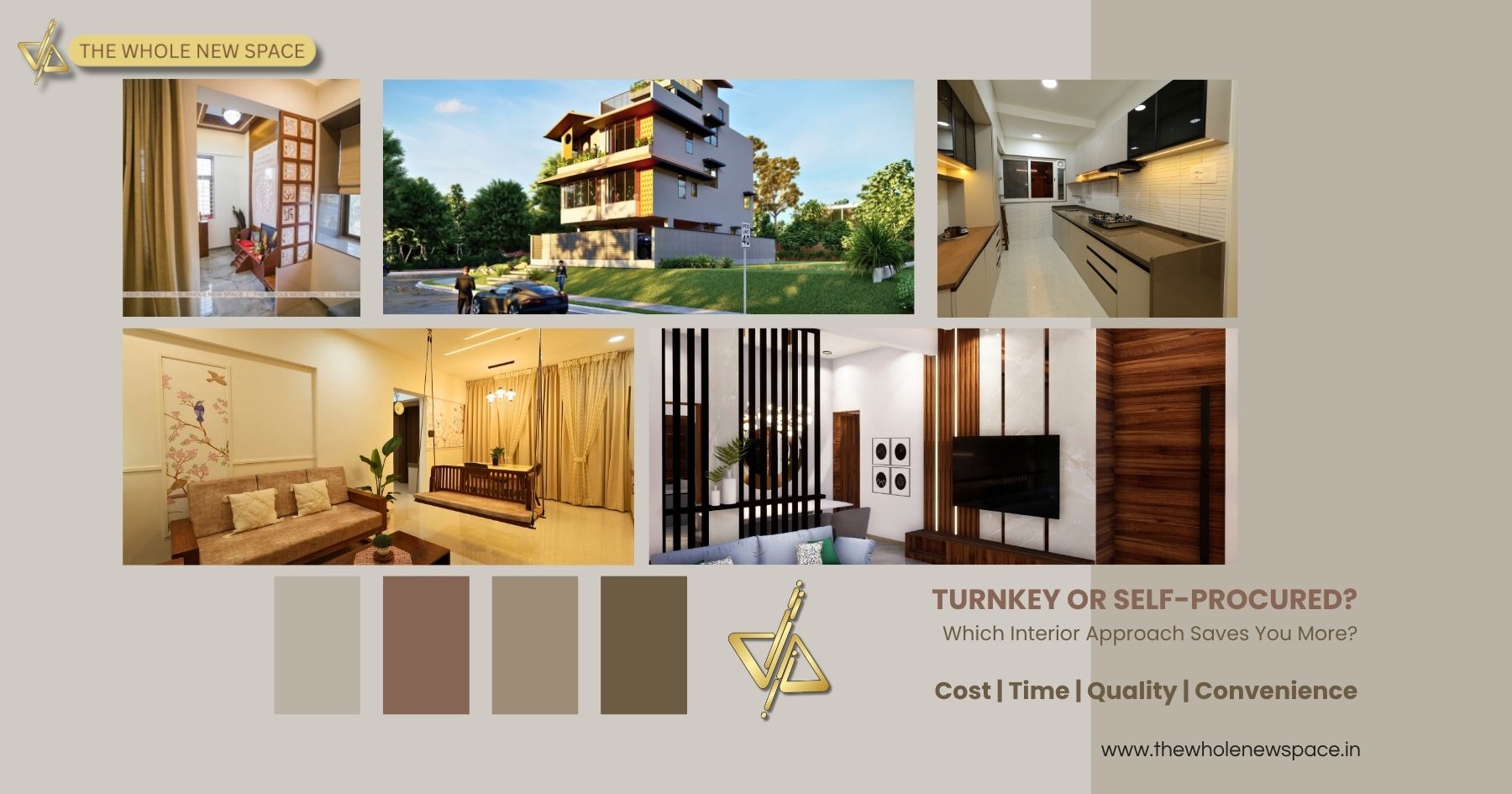
Turnkey vs. Self-Procured Interiors: Which Approach Is Right for You?
By The Whole New Space | We Design for Living
Designing a home or commercial space is exciting, but deciding how to manage materials, vendors and execution can feel overwhelming. Should you hand over the entire project to a professional team, or pick and buy every tile and fitting yourself?
At The Whole New Space, we know every client is different. Some want a fully managed project, others love choosing their own materials, and many want a bit of both. That is why we offer three ways of working: Turnkey, Self-Procured and Hybrid.
What Is a Turnkey Interior Solution?
In a turnkey project, one team looks after everything from the first design sketch to the final handover. Depending on the agreed scope, this can include:
- Interior design and space planning
- 3D visualisation and design concepts
- Material selection, specifications and procurement
- Civil work, carpentry, electrical and plumbing
- False ceiling, painting and finishing
- Furniture, fixtures and installation
- Site coordination, final inspection and handover
In simple terms, one professional team coordinates the whole project for you.
Benefits of Going Turnkey
- One point of contact. No chasing multiple contractors, suppliers and workers.
- Better coordination. Design, materials and execution are planned together, which reduces mismatches and confusion on site.
- Saves your time. Procurement, deliveries, vendor follow-ups and supervision are handled for you.
- Design consistency. Materials and finishes follow the approved design concept.
- Easier project management. Activities run to a single schedule.
- Clearer accountability. When one team manages design, procurement and execution, responsibility is easier to identify.
What Is Self-Procured Material?
In this model, you buy some or all of the materials directly, while the designer and execution team handle the agreed design and work. Clients commonly self-procure items such as tiles, laminates, plywood, sanitaryware, bathroom fittings, lighting, electrical accessories, kitchen appliances, furniture, decorative products and hardware.
The key is that responsibilities are defined upfront, so there is no confusion between you, the designer, the contractor and the suppliers.
Benefits of Self-Procurement
- Greater product choice. You pick the brands, models, colours and finishes you love.
- Direct purchasing control. You see the product and the purchase price yourself.
- Flexible budgeting. Spend more on what matters, such as kitchen hardware, and save on decorative elements.
- Your preferred brands. Continue with suppliers you already trust.
- More involvement. Ideal if you enjoy shaping your interiors personally.
Turnkey vs. Self-Procurement at a Glance
| Factor | Turnkey | Self-Procured |
| Project management | Managed by professional team | Primarily managed jointly |
| Customer involvement | Lower | Higher |
| Material selection | Guided by designer | Customer control |
| Procurement | Professional team | Customer |
| Vendor coordination | Professional team | Customer |
| Time required from you | Lower | Higher |
| Product flexibility | High | High |
| Convenience | Very high | Moderate |
| Accountability | More centralised | Customer |
There is no single right answer. The best choice depends on your lifestyle, budget, availability, knowledge of materials and how involved you want to be.
What About Cost?
“Which option will cost less?” is the question we hear most. The honest answer: it depends on the project.
Self-procurement can give you room to negotiate directly with suppliers. But the material price is only part of the story. Also consider:
- Transportation and delivery charges
- Storage of materials
- Wastage and quantity calculation errors
- Damaged materials and replacements
- Site coordination and labour scheduling
- The time you spend shopping
- Delays caused by unavailable materials
A turnkey project may include professional procurement and project-management costs, but it can save you a great deal of time and coordination effort. So compare the complete project value, not just the price tag on the materials.
Can You Combine Both? Yes: The Hybrid Model
Many of our clients prefer a middle path. With a Hybrid Procurement Model, we manage the design, space planning, BOQ and specifications, carpentry, civil work, electrical, plumbing, false ceiling, painting, installation and site coordination.
You purchase the items that are personal to you, such as appliances, decorative lights, loose furniture, premium sanitaryware, artwork, home accessories or specific branded products.
You stay in control of what matters most to you, while our team handles design and execution.
Which One Should You Choose?
- Want convenience? Choose our Turnkey Interior Solution. We coordinate the agreed scope from design to execution so you can focus on your life and work.
- Want control? Choose our Self-Procured Material Model. You buy selected materials while we manage the agreed design and execution.
- Want flexibility? Choose a Hybrid Approach. We divide procurement responsibilities based on your preferences and the project needs.
Our Promise: Your Space, Your Choice
At The Whole New Space, we believe interior design should reflect your lifestyle, personality and priorities. Some clients want us to manage everything. Some want to select their own materials. Some want a combination. We are ready for all three.
Our objective never changes: to bring your design vision to life with thoughtful planning, professional execution and transparent coordination.
Your home is more than walls, furniture and finishes. It is where life happens.
Connect With Us
Ready to start? Get in touch with The Whole New Space for designing your:
- 1BHK
- 2BHK
- 3BHK
- 4BHK
- Bungalow
- Penthouse
- Farmhouse
Tell us your requirements and we will help you choose the approach that works best for you: Turnkey, Self-Procured or Hybrid.
The Whole New Space: We Design for Living.


Leave a Reply